

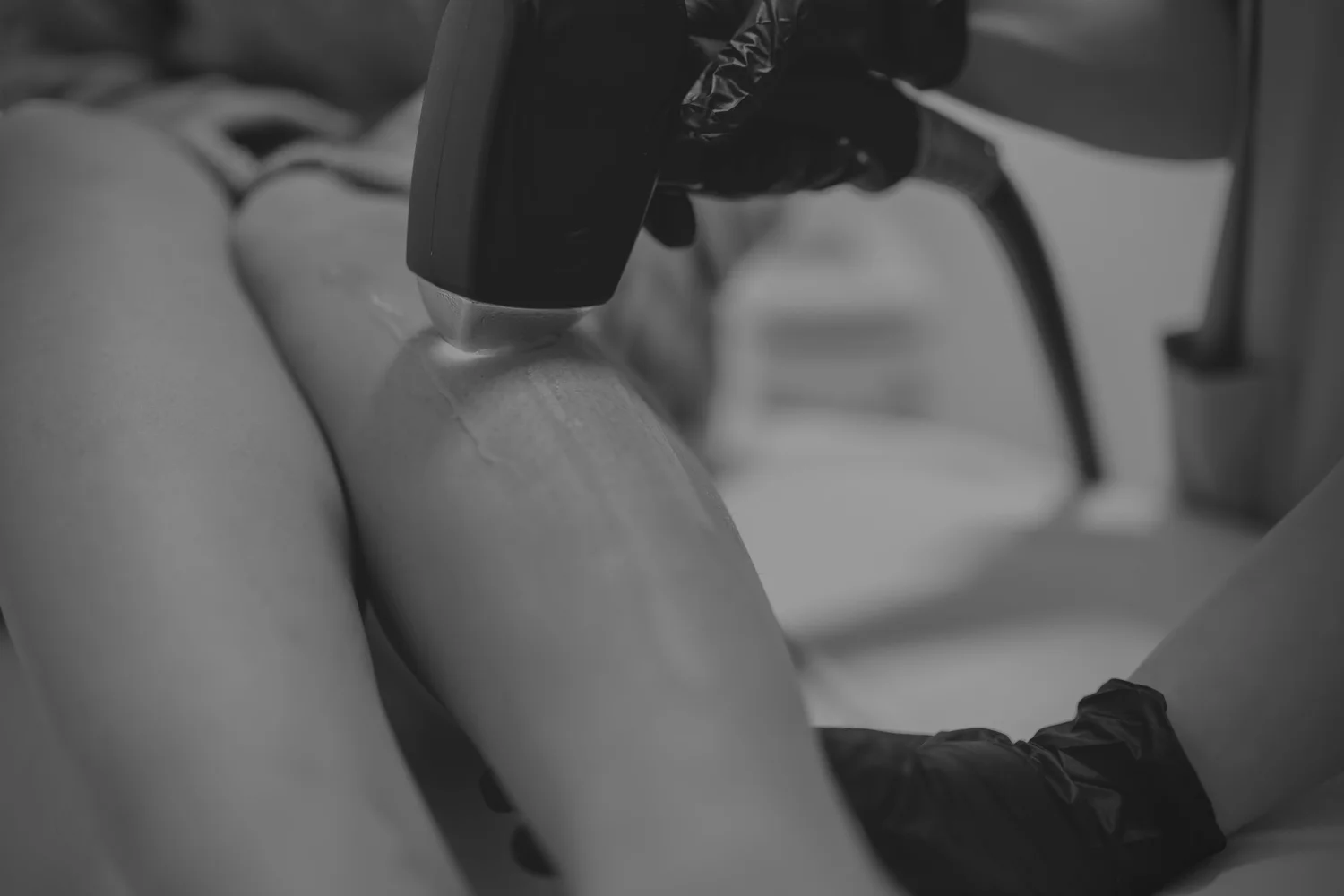
Laser hair removal
Less hair
Less fuss
If reducing unwanted hair would make life easier for you, let’s talk.
Laserasure’s diode hair removal treatments start with a skin assessment, so we can discuss realistic expectations and find a plan that makes sense for you.
Book a patch test ↓Hair removal pricesChoose your area
Prices depend on the size of the area, and every course starts with a patch test. Choose an option below to see prices and available times.
Loading treatments…
Save 20%Hair removal packages
Buy 6 sessions for 20% less than booking individually, and valid for a year. Simply purchase a package, then book each session as you go.
Loading packages…

Before you come in
Prep
Shave the area the day before, and avoid waxing or plucking for four weeks beforehand.
Be like Dracula and STRICTLY avoid the sun, sunbeds and fake tan for at least two weeks before your treatment.
Come in for a patch test at least 48 hours before your first session.
During the consultation, we'll review your skin type and medical history and make a treatment plan that is tailored to you.
Who is laser hair removal for and is it worth it?
While not for everyone, laser hair removal is for anybody who, for any reason, would prefer not to have hair somewhere.
It gives confidence and freedom to people who feel restricted by their hair. Perhaps they no longer want:
- To cover up an area they keep hidden because of it
- To deal with stubborn hormonal hairs
- The discomfort and embarrassment associated with ingrown hairs
- The itchiness and annoyance of stubble
- The constant upkeep associated with shaving
- The pain associated with waxing and plucking
- The cost over a lifetime of removing the hair over and over again…
Because laser hair removal destroys hair from the root, all of the problems above can be helped within as few as 6 sessions.
Is it worth it?
Well, imagine no longer worrying about any of those problems, and the feeling of freedom it could give you.
Plus, while laser hair removal can seem expensive upfront, in comparison to a lifetime's worth of other hair removal services, you will save a great deal of money.
Let's take the cheapest form of hair removal (shaving) as an example:
- Fresh pack of disposable razors = £5–15
- Using one pack a month = £60–£180 a year
- From, say, age 15–70? = 55 years of shaving
- Times that by the yearly cost = £3,000–£9,000
Again, that is the CHEAPEST option – and that's without factoring the cost of the shaving foam, lotions, water as well…
So, while laser hair removal can't guarantee PERMANENT removal of all hair (as we all have dormant follicles that can activate as we age, experience hormonal changes, or go through illness) it can certainly give you a lot more confidence in the long term.
How does laser hair removal work?
The diode machine at Laserasure works on a principle known as selective photothermolysis. Simply put, focused light is set to target a particular colour (in this case, the dark pigment found in the hair). The light is flashed very quickly at your skin as the device is gently passed across it.
The energy created destroys the follicle of any actively growing hairs, so once they fall out, they are usually unable to grow back.
As our hair grows in cycles rather than all at once, multiple sessions spaced several weeks apart are needed to catch as many actively growing hairs as possible.
How many sessions will I need?
Most people need around 6 to 8 sessions. Hair grows in four stages, and the laser can only treat hairs that are actively growing at the time. Spacing your sessions a few weeks apart means every hair can be treated in its growing stage.
Does it work on all hair types and colours?
As laser hair removal works by targeting the pigment found in the hair, it is most effective on dark hair, and the coarser the hair, the more pigment to target. That doesn't mean black hair only, though: brown and even dark blonde hair can see results with the right settings.
If you're unsure if the treatment is right for you, please get in touch.
Is it safe for all skin types?
With the right laser and settings, it can be. However, as the melanin in darker skin will compete with the melanin in the hair, treatments must be carried out more cautiously and will usually require more sessions.
The diode laser at Laserasure is most effective on Fitzpatrick skin types I to IV.
If you're unsure if the treatment is right for you, please get in touch.
Does it hurt?
You'll feel the laser working on the pigment during your treatment. Some people compare it to an elastic band snapping, but everyone's tolerance is different, and you will be asked FREQUENTLY how comfortable the treatment is feeling.
The best news is that the diode laser used has an advanced cooling tip that glides gently over the skin during the whole treatment, which reduces discomfort and helps to lessen side effects.
Soothing aloe vera gel is also applied after every treatment.
What happens at my appointment?
You'll be welcomed into the studio and I'll make sure you're comfortable. I'll explain each step of your treatment in detail, then ask you to sign a consent form.
Your skin will be cleansed with a hypoallergenic cleanser, and the area being treated will be marked out with a white cosmetic pencil. Then your treatment begins. I'll check in with you regularly, and you can ask me to pause or stop at any time.
Afterwards, you'll have your aftercare advice and treatment before booking in for your next session.
Are there any side effects?
After hair removal, you may notice some redness or mild swelling, which should subside within a few hours of your treatment.
Far more rarely, the skin can become lighter or darker (hypopigmentation or hyperpigmentation).
Your consultation and patch test help me spot if any of these side effects are likely for you, and using SPF and avoiding the sun both BEFORE AND AFTER every treatment reduces the risk.
If you're worried about any side effects, please get in touch. I'm always happy to help.
How should I look after the treated area?
- Be gentle and keep it clean, dry and out of the sun while it heals.
- Avoid perfumed or alcohol-based products, as they can irritate your skin.
- Apply pure aloe vera gel or a barrier cream if you'd like some extra soothing.
- Wear SPF, or keep the area covered, to reduce the risk of pigmentation changes.
Get in touch